
























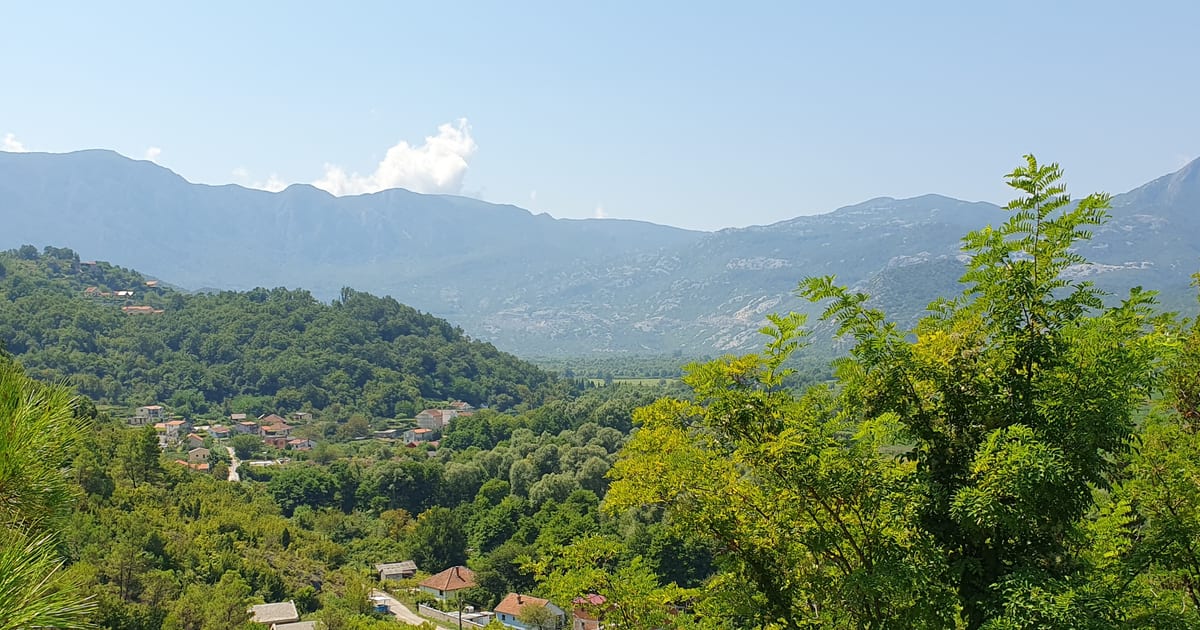
The first question we ask about any plot is not what the view is but how you reach it, and whether the lane you reach it by belongs to anyone who could close it. On the Montenegrin coast the answer is often that it belongs to a neighbour, or to the descendants of the family that once owned the whole hillside, and that the right to use it has never been written down. This guide explains how legal access works, how to check it and how to secure it before you buy.
Why is access the first check?
Because the planning conditions, the permit and the value of the plot all depend on it. The conditions name the road the parcel is served from. The permit requires that the parcel can be reached from a public road, directly or over a registered right. And a plot that cannot legally be reached cannot be built on, cannot be sold as a building plot and cannot be connected to utilities whose cables and pipes must cross the same lane. Every other check rests on this one, which is why it sits at the top of our due diligence alongside the title search described on our why Montenegro page.
Public road, private lane or something in between?
The cadastre records roads as parcels. A public road is a parcel in public ownership, and a plot that touches it has access by right. A lane that is part of a neighbour's parcel is private, however long the village has walked on it. Between the two are lanes recorded as separate parcels owned jointly by several families, which were created when a hillside was divided and are private in law and shared in practice.
The surveyor's plan shows the physical lane; the cadastre shows who owns it. When the two are read together, most plots fall into one of three cases: direct access to a public road, which is simple; access over a private lane with a registered easement, which is fine; or access over a private lane with no registered right, which is the case this guide is about. Our guide to plot surveying and boundaries explains how the survey is obtained.
What is an easement and how is it created?
An easement, called a servitude in Montenegrin practice, is a right recorded in the cadastre that allows the owner of one parcel to use part of another for a stated purpose: passage on foot, passage with vehicles, the laying of a water pipe or an electricity cable, the drainage of water. It is created by an agreement between the owners of the two parcels, signed before a notary, and registered against both parcels so that it binds every future owner of each.
The agreement states the route, usually drawn on the survey, the width, the purposes and any compensation. A well-drafted easement for a villa plot covers vehicles, construction traffic during the works and the utilities, because a right of passage on foot does not entitle you to dig a trench for a cable.
What happens when the neighbour will not sign?
A parcel with no access to a public road has a route in law to obtain a necessary passage over neighbouring land, with compensation to the neighbour, through a procedure before the court or the competent authority. It exists, it works, and it is slow and unpredictable. A buyer who purchases a landlocked plot relying on it has bought a procedure, not a plot.
Our advice is simple: secure the easement by agreement before purchase, or make the purchase conditional on it, so that the seller has every reason to help obtain the neighbour's signature. Sellers who have lived in the village for decades can usually arrange in a week what a foreign buyer could not arrange in a year.
Who maintains a private lane?
A registered easement gives the right to pass; it does not by itself say who repairs the concrete after the winter rain or who clears the fallen wall. The agreement can set this out, and it should, because a lane shared by four villas and a farmer is a lane that someone will argue about. Shared lanes recorded as a joint parcel are maintained by the co-owners, and buying a share in the lane parcel, where the seller holds one, is often the cleanest arrangement of all.
How does access interact with the works?
Construction traffic is heavier and wider than a car, and an easement for passage does not always permit a concrete mixer or a crane. Before buying we drive the route with a builder and confirm what can reach the site, and the easement is drafted to cover construction traffic for the duration of the works. Where the lane is physically too narrow, a temporary arrangement with the neighbour for the works is agreed in the same document.
Steep lanes also carry the utilities. The electricity cable and the water pipe run in a trench along the lane, and the easement must permit it. Our guide to connecting utilities explains the practical side.
Which situations should make a buyer pause?
A short list from our own files:
- A lane that is part of a neighbour's parcel with no easement, and a neighbour who is not available or not willing
- A lane owned by many heirs of an undivided estate, so that no single person can sign
- An easement that permits passage on foot only, for a plot that needs vehicles and services
- A planned public road in the planning document that has not been built, and no present access
- A lane that crosses land in a protected zone where widening or trenching is restricted
Each is solvable in some cases and not in others, and the time to find out is before the deposit. Plots that fail this check sit at the bottom of the price range in every municipality, as our guide to land prices by municipality explains, and they are cheap for a reason.
What should a buyer ask for?
The cadastral extract for the parcel and for the lane that serves it, showing whether the lane is public or private and who owns it; where private, the registered easement in the title or a signed agreement ready for registration; the surveyor's confirmation that the lane on the ground follows the lane in the cadastre; and a builder's confirmation that the route carries construction traffic.
Every plot on our listings has passed this check. If you are looking at a plot elsewhere and the access is a lane rather than a road, send us the parcel number and we will tell you who owns the lane and what it would take to secure the right to use it.