
























Of the questions a buyer asks about a plot, the one asked least often and regretted most is where the water comes from. Montenegro's coast is well served along the roads and poorly served two hundred metres above them, and the plots with the best views are often the ones furthest from the main. This guide explains how each utility reaches a building plot, who you deal with and how we turn the answers into a figure before a client commits.
What do the planning conditions say about utilities?
The urbanistic technical conditions issued for a parcel include a section on infrastructure: which road the plot is served from, where the connection to the electricity network is planned, where the water main and the sewer run, and whether a septic system is permitted where the sewer does not reach. This section is the starting point for every question in this guide, and our article on the urbanistic technical conditions explains how the document is obtained.
The conditions describe what the plan intends. The ground describes what exists today. A planned sewer line that has not yet been built is a sewer line you cannot connect to, so we read the conditions and then walk the lane with a builder.
How is electricity connected to a new villa?
The distribution company for the area connects the house on the owner's application, once the permit documents exist. The application states the power the house needs, and the company issues the technical conditions for the connection and the fee. A villa with a heat pump, a pool pump, an electric oven and air conditioning in every room needs a stronger connection than a holiday flat, and asking for too little at the start means asking again later.
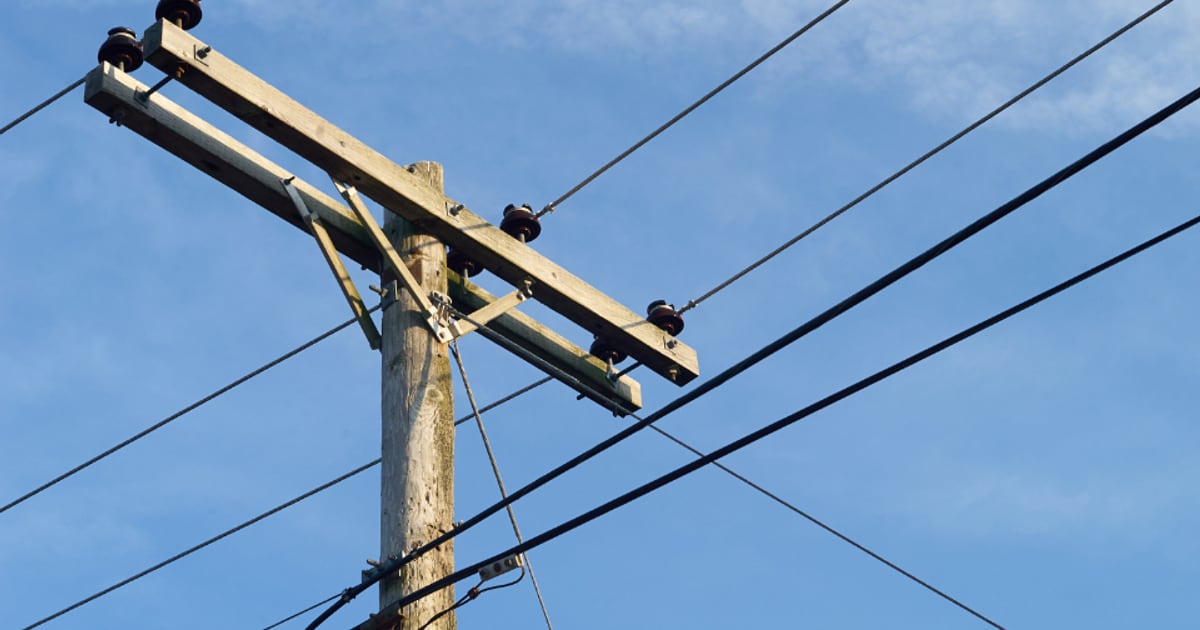
The practical question is the distance to the nearest point of the network with capacity. A pole at the edge of the plot is one case; a transformer three hundred metres down the hill is another, and the cable between them is paid for by the owner. On steep plots the cable runs in a trench along the access lane, which is one more reason the legal status of that lane matters.
Where does the water come from?
Along the coast the municipal water company supplies most settlements, and the planning conditions state whether the plot is within the served area. The connection is applied for with the permit documents, and the owner pays for the pipe from the main to the plot boundary where the main does not already pass it.
Above the served area, and in much of the hinterland, the options are a well where the ground allows one, a cistern filled from the roof and topped up by delivery, or a shared private line from a spring. All three work and all three are common; they are simply a different way of living and a different line in the budget. Summer pressure can be low in the busiest coastal settlements even where the main exists, and most villas install a storage tank and a pump as standard.
Sewer or septic: which does the plot allow?
Where the public sewer reaches the plot, the house connects to it and the conditions will say so. Where it does not, the conditions usually allow an approved septic system, sized for the number of bedrooms and placed within the plot at the distances the rules require from boundaries, wells and the house. A modern system is a sealed tank with a treatment stage and is emptied on a schedule, and buyers from countries where septic systems are rare are often surprised how ordinary they are here.
The question to ask is not whether the plot has a sewer but whether the plot has room for the system the rules require, given the setbacks and the slope. A small steep plot may struggle to place a tank legally, and that is something to know before buying rather than during the design.
What about internet, telephone and television?
Fibre has reached the towns and many villages along the coast and in the central region, and the operators extend it along roads where there are enough houses. Where fibre has not arrived, fixed wireless from a mast with line of sight or a mobile data router covers most slopes with a view, because a slope with a view usually has a line of sight to something. Television comes by satellite or over the internet.
For buyers who intend to work from the villa, we test the mobile signal on the plot and ask the operators about fibre plans before listing. A plot with no signal and no fibre is rare on the coast, but it exists in the folds of the hills, and it is a fact to know before you buy.
How are rainwater and road drainage handled?
Montenegro's coast has intense autumn rain, and a slope that is dry in July carries a stream in November. The house and the terraces need drainage designed for it, and the plot needs to shed water onto a road drain or a watercourse without flooding the neighbour below. The design handles this, but the buyer should look at where the water goes today, and a viewing after heavy rain tells you more than three in sunshine.
Plots with a culvert or a seasonal stream along a boundary have rules about building near it, which the conditions state. These are the plots where our guide to plot surveying and boundaries earns its place, because a watercourse is often also a boundary.
How do the utilities change the plot comparison?
Two plots at the same price with the same view can differ by the cost of a cable, a pipe, a pump and a tank, and the difference is a real part of the build budget. Before a client decides, we put the utilities into a single line for each plot:
- Electricity: distance to the connection point and the capacity available
- Water: municipal connection, well or cistern, and the storage needed
- Sewage: public sewer or septic system, and whether the plot has room for it
- Internet: fibre, fixed wireless or mobile, tested on the plot
- Drainage: where the water goes and what the design must handle
With this line next to the buildable area and the groundwork, the comparison between plots becomes a comparison between finished villas, which is what the buyer is actually choosing. The wider picture of costs sits in our guide to building costs per square metre.
What should a buyer do before reserving?
Ask for the planning conditions and read the infrastructure section. Walk the lane and find the pole, the hydrant and the manhole, or confirm that they are not there. Ask the seller how the plot is served today, if at all, and ask the neighbours how they are served. Then put the answers into the budget before the price negotiation, not after.
Every plot on our listings carries this information, and for a plot you have found yourself we will check it with the same method; send us the parcel and we will tell you what connects, what does not and what each gap would cost to close.