
























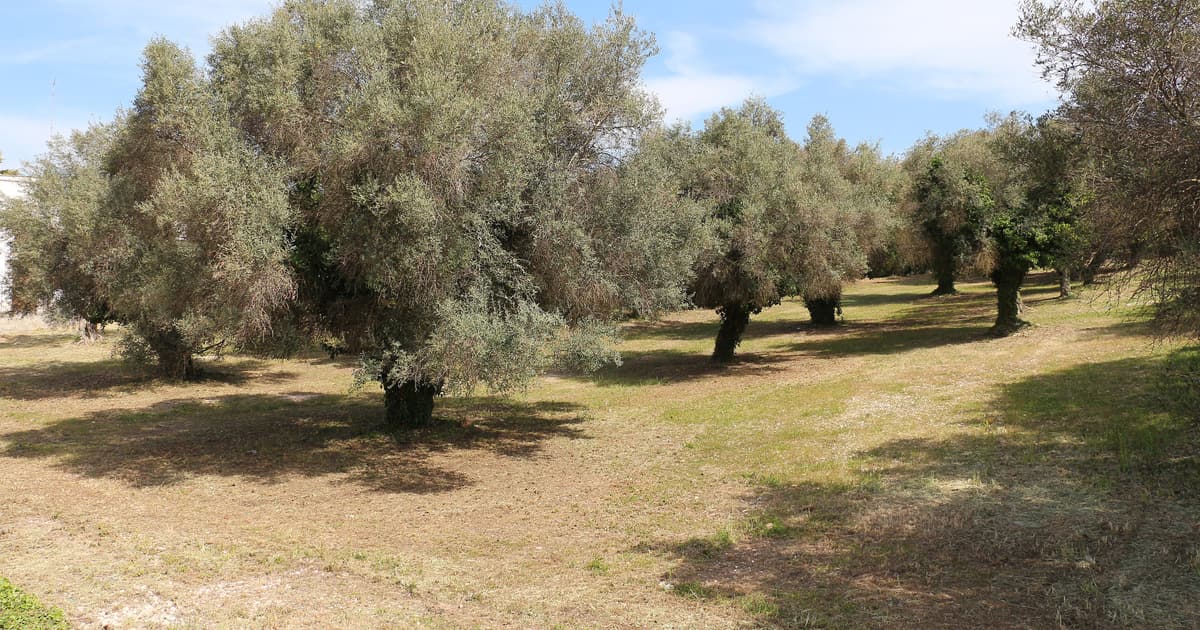
A field above a coastal village sells for a fraction of the price of a building plot a few hundred metres away, and every month a buyer asks us whether they can buy the field and build on it. The honest answer is that it depends on a document, not on the seller's confidence, and that the document can be read before any money moves. This guide explains how land use is set in Montenegro, when a field can become a plot and how we price the possibility when it is real.
What decides whether land can be built on?
Two records describe a parcel. The cadastre gives it a category, such as field, meadow, orchard, forest or building land, which reflects how the land has been used. The planning document gives it a zone, such as residential, tourist, agricultural or protected, which states what may be built. The zone decides. A parcel recorded as a meadow in the cadastre but lying in a residential zone can be built on once the cadastral category is updated; a parcel recorded as building land but lying in an agricultural zone cannot.
Sellers often quote the cadastral category, because it is on the extract they hold. Buyers need the zone, which comes from the municipality. Our guide to the urbanistic technical conditions explains how to obtain it for a specific parcel.
When is conversion straightforward?
When the plan already allows building on the parcel. In that case the land is in effect a building plot that the cadastre has not caught up with. The change of cadastral category follows the plan, a fee for the change of use is paid, and the planning conditions are issued as for any plot. Fields of this kind exist in every settlement that has grown, and they are often the best value on the market, because they are priced between a field and a plot while being, in law, the latter.
Finding them is the work. We check the zone of every parcel we consider, and when a field sits in a zone that allows building, we say so and price it accordingly on our listings.
When is conversion uncertain?
When the parcel lies outside the zones that allow building and the only route is an amendment to the plan. Municipalities revise their plans periodically, and settlements do extend into adjoining fields, but the process has no fixed timetable, it involves public consultation and approval at more than one level, and a particular parcel may or may not be included. A buyer who pays plot money for a field in the expectation of a rezoning is taking a planning risk with no date and no guarantee.
We do not tell clients it will never happen, because it does happen. We tell them to pay for the field as a field, to treat rezoning as a possibility, and to buy only if they are content to own a field for years.
When is conversion not possible?
When the parcel lies in a zone that the plan protects: agricultural land of high value, forest, a water protection zone, a cultural landscape or a strip along the coast. These zones exist precisely to prevent conversion, and a plan revision is unlikely to remove the protection. Land in such zones is priced for its agricultural or amenity value, and its appeal is as an olive grove, a vineyard or a buffer around a villa, not as a site. We treat it as a different purchase with a different purpose.
What does the change of use cost and involve?
Where the plan allows building, the owner applies for the change of the cadastral category and pays the fee set for the change of use of agricultural land. The fee is calculated under the rules in force at the time and depends on the land and its location, so we obtain the figure from the authority for each case rather than estimating it. The change is recorded in the cadastre, and from then on the parcel is building land for every purpose, including the planning conditions and the permit.
The timing of the fee matters to the budget. It falls on the owner at the time of the change, so a buyer who buys the field and then converts pays it; a buyer who asks the seller to convert before the sale pays for it in the price. Either is fine, as long as it is in the calculation.
What about building a farmhouse or an agricultural building?
Some planning documents allow limited buildings on agricultural land for agricultural use, and sellers sometimes present this as a route to a villa. It is not. A building permitted as an agricultural structure is restricted in size, form and use, and turning it into a home with a pool is the same unpermitted building as starting from scratch. Buyers who want a rural house with land should look for a parcel where the plan allows a house and the surrounding field stays agricultural, which is a common and legitimate combination.
How do we price a field with potential?
We put the parcel into one of three categories after reading the zone, and we price each differently:
- Zoned for building, cadastre not yet updated: priced as a plot less the conversion fee and the delay
- Outside the building zone, adjoining a settlement, plan revision plausible: priced as a field, with the potential noted but not paid for
- Protected zone: priced for agricultural or amenity use, with no building potential assumed
The first category is a good purchase for a buyer who intends to build. The second suits a patient buyer with a long horizon. The third suits a buyer who wants land for its own sake, or who wants to protect the view from an existing villa. Confusing the three is the expensive mistake, and the field with a view is never cheap enough to justify it.
What should a buyer ask before paying for a field?
Ask for the extract from the planning document showing the zone of the exact parcel, not the neighbouring one. Ask the municipality whether a plan revision is in procedure and whether the parcel is within it. Ask for the current cadastral category and, where the zone allows building, for the conversion fee. Then look at the access and the utilities, which are covered in our guides to access roads and easements and to connecting utilities, because a field that can be built on but cannot be reached or served is a field again.
If you have found a field and the seller says it can be built on, send us the parcel number before you travel to see it. The zone is a matter of record, and reading it costs a day rather than a deposit.